Calculate storage capacity in bushels for round bins, hopper-bottom bins, and flat-bottom steel bins. Enter bin diameter and eave height and select your grain type — supports corn, wheat, soybeans, canola, and custom test weights.
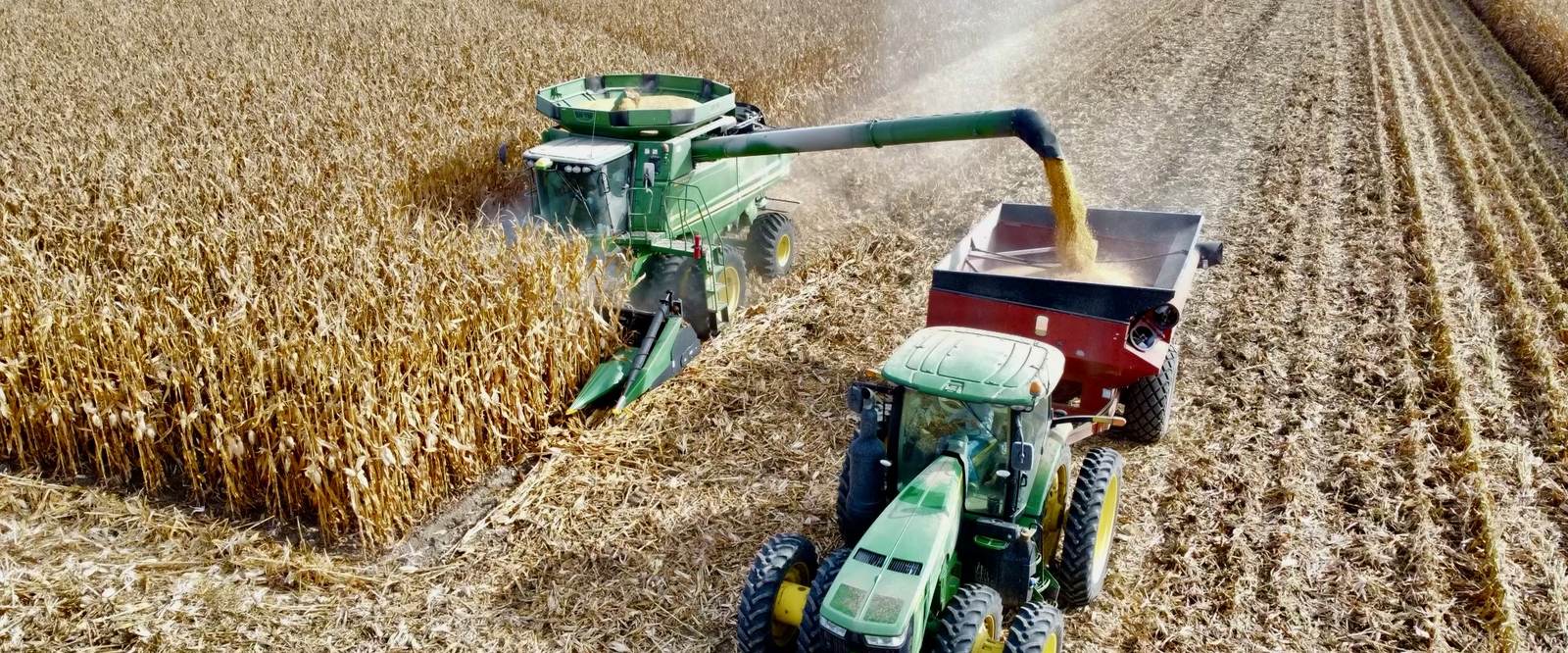
Calculate storage capacity in bushels and tons for round bins, hopper-bottom bins, and flat storage buildings or outdoor piles. Enter your structure dimensions and grain type — the calculator applies the correct bulk density and packing factor for corn, soybeans, wheat, canola, barley, or oats. Results include volume in cubic feet and cubic metres, total bushels, and weight in pounds and metric tons.
Calculate how many bushels or tonnes a bin, silo, or flat storage can hold.
Fill in the fields and press Calculate to see your results.
📊 Related calculators: Grain Drydown — calculate shrink and drying cost before putting wet grain in the bin. | Grain Trailer — calculate how many trailer loads it takes to move your crop. | Ag Loan — evaluate the financing cost of a new bin investment.
A grain bin is a large cylindrical steel structure used to store harvested grain on a farm. Bins range from small 3,000-bushel bins to massive commercial structures holding over 1 million bushels. Capacity is calculated from the bin's diameter and eave height using the formula for a cylinder: volume = π × radius² × height. Because grain doesn't fill a perfect cylinder (it piles in a cone), a grain peak factor is added. One bushel of corn weighs 56 lb; one bushel of wheat weighs 60 lb; one bushel of soybeans weighs 60 lb.
These USDA standard test weights are used by grain elevators for all weight-to-volume conversions.
Round bin capacity (bu) = (π ÷ 4) × diameter² × grain depth × 0.8036 (for corn at 56 lbs/bu). A 42-foot diameter bin with 28 feet of grain depth holds about π/4 × 42² × 28 × 0.8036 ≈ 38,900 bushels of corn. Different grains have different bushel weights, so a 60-lb wheat bushel takes less space than a 56-lb corn bushel.
1 bushel = 1.2445 cubic feet. Divide cubic feet by 1.2445 to get bushels. A 50,000 cubic foot bin holds 50,000 ÷ 1.2445 ≈ 40,177 bushels of any grain. Actual capacity varies slightly by grain weight — the calculator adjusts for corn, soybeans, wheat, canola, and other commodities.
A grain bin capacity chart shows estimated bushel capacity for standard bin diameters at various eave heights. Rather than a static chart, this calculator lets you enter your exact dimensions for a precise answer. Quick reference: a 48-ft bin with 16-ft eave height holds roughly 20,000–22,000 bushels of corn at 56 lbs/bu.
Select your bin type (round, hopper-bottom, or flat storage), enter your dimensions in feet, choose your grain, and click Calculate. The standard formula is: π × r² × eave height × bu/ft³ conversion factor. This calculator applies the correct bulk density for each grain automatically. Results show total capacity in bushels and tons.
For flat-bottom storage buildings, select the Flat Storage tab, then enter floor length, floor width, and peak grain height. The calculator applies: length × width × peak height × bu/ft³ factor with a correction for pile geometry at the walls. Results show bushels and tons for corn, wheat, soybeans, or any grain you select. To calculate the ROI on your storage investment, run your numbers through the Ag Loan Calculator.
This is a standard grain storage math problem. Here is the worked example step by step:
Given: Diameter = 15 ft 3 in = 15.25 ft | Height = 24 ft 4 in = 24.33 ft | 0.804 bushels per cubic foot (wheat)
Step 1 — Radius: 15.25 ÷ 2 = 7.625 ft
Step 2 — Volume: π × 7.625² × 24.33 = 3.14159 × 58.14 × 24.33 = 4,443 cubic feet
Step 3 — Bushels: 4,443 × 0.804 = 3,572 bushels
The answer is approximately 3,571–3,572 bushels (answer A in most textbook versions of this question). The small variation comes from rounding π. Note that 0.804 bu/cu ft is the standard textbook conversion for wheat; the USDA standard bulk density of 60 lbs/bu and 1.2445 cu ft/bu gives the same result. Use the calculator above to run your own bin dimensions.
This is a standard grain storage math problem. Here is the worked example step by step:
Given: Diameter = 15 ft 3 in = 15.25 ft | Height = 24 ft 4 in = 24.33 ft | 0.804 bushels per cubic foot (wheat)
Step 1 — Radius: 15.25 ÷ 2 = 7.625 ft
Step 2 — Volume: π × 7.625² × 24.33 = 3.14159 × 58.14 × 24.33 = 4,443 cubic feet
Step 3 — Bushels: 4,443 × 0.804 = 3,572 bushels
The answer is approximately 3,571–3,572 bushels (answer A in most textbook versions of this question). Note that 0.804 bu/cu ft is the standard textbook conversion for wheat. Use the calculator above to run your own bin dimensions instantly.